
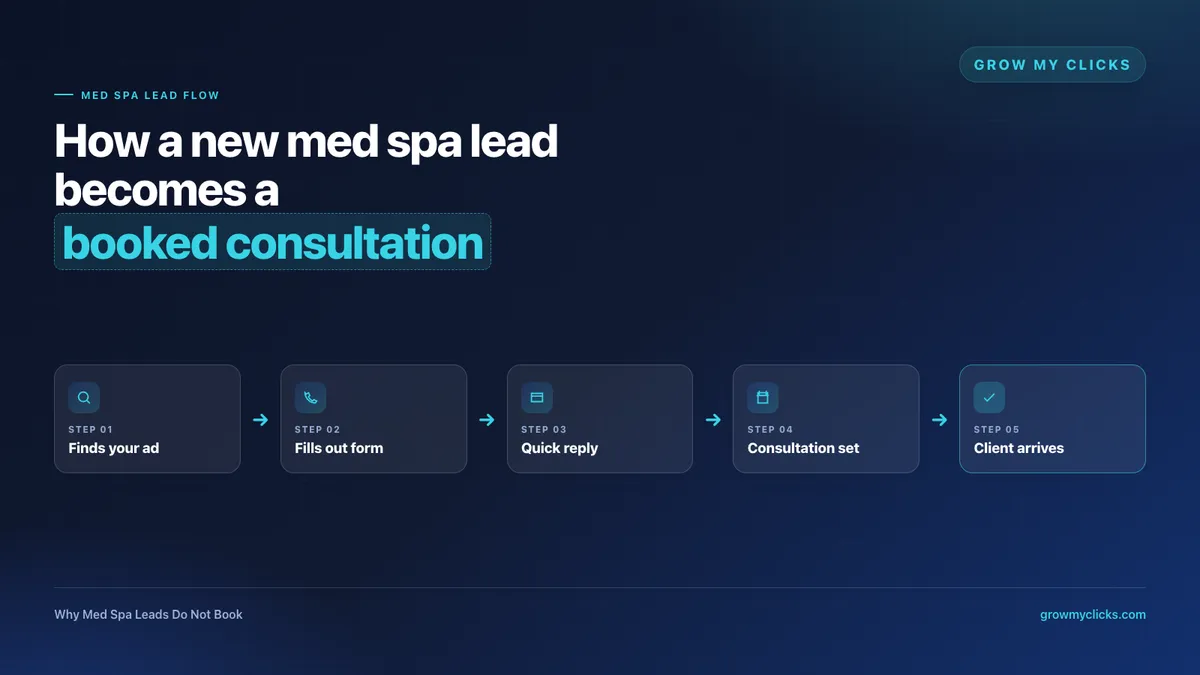
Google Ads for Med Spas
Why Med Spa Leads Do Not Book After Filling Out a Form
A form submission shows interest. It does not mean the person is ready to book without another step.
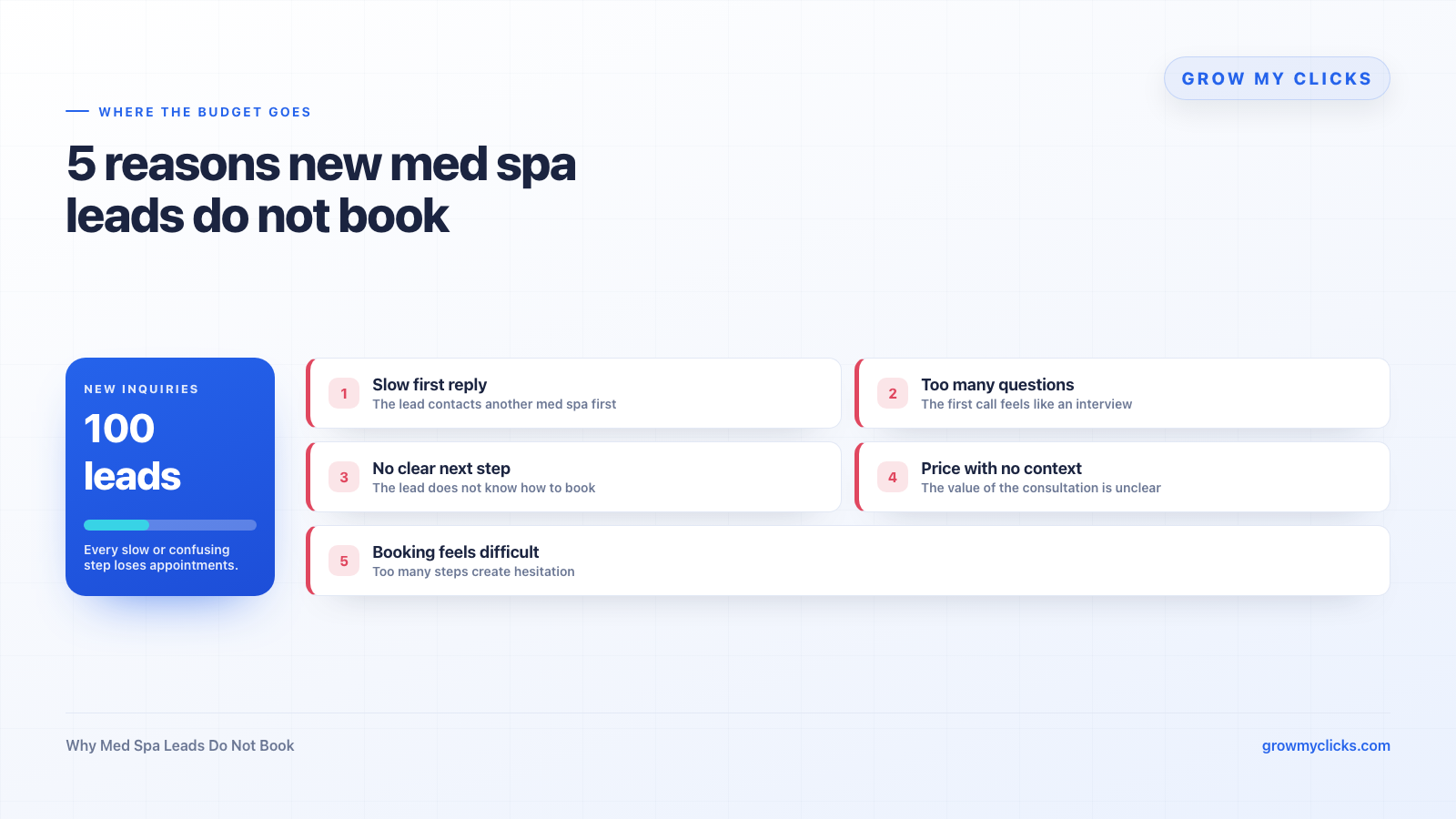
The lead may still have questions about the treatment, timing, price, provider, or what happens during the consultation. If the reply is slow or the next step is unclear, that interest can fade.
This guide focuses on the handoff after the form: who responds, what the lead receives, how follow-up works, and how the team records the appointment outcome.
The person is interested, but not fully committed
People fill out forms for many reasons. One person may be ready to book today. Another may be comparing prices. Someone else may feel nervous about a treatment and want to ask a private question.
All three are real leads. But they need different kinds of help, and your booking process must fit into a busy day.
Slow replies give interest time to fade
The first fix is simple: reply as soon as you can.
A fast reply connects your med spa to the form the person just filled out. A slow reply makes your call or text feel unexpected. The person may forget which business they contacted, speak with another med spa, or decide to wait.
Your first message does not need to be long. It can say:
Hi Maya, this is Jen from Bright Skin Med Spa. I saw your request about laser hair removal. I can help with questions or find a time for you. Would you rather text here or have me call you?
This message works because it names the med spa, mentions the service, and gives the person a simple choice.
Set a clear rule for your team. Decide who watches for new requests during business hours. Decide who takes over when that person is busy. If requests arrive at night, send a short confirmation right away and state when a team member will respond.
Some booking tools can also help outside business hours. Boulevard says its medical spa tools can answer calls, help clients book, capture leads around the clock, and reduce missed calls. The tool matters less than the result: a person should not wonder whether anyone received the request.
Your next step may be too hard
Many med spas ask people to fill out a form and then wait for a call. That creates extra work for both sides.
The staff member must call. The lead must answer at the right moment. Then both people must compare schedules. If they miss each other, the process starts again.
Make booking easier. After the form is sent, offer a clear way to choose an appointment online. If a consultation is required, let the person book the consultation. If your team must check whether a treatment is a fit, offer a short call and show the available times.
Also check the booking page on a phone. Most people should be able to understand it without zooming, searching, or creating a long account. Ask a friend who has never used the page to try it. Watch where they pause or get confused.
People do not know what will happen next
A weak thank-you message often says, “Your form was submitted.” That confirms a button worked. It does not tell the person what comes next.
A better message answers four questions:
- Did the med spa receive my request?
- Who will contact me?
- How will they contact me?
- When should I expect a reply?
For example:
Thanks, Maya. We received your request about laser hair removal. Jen from our front desk will text you from this number within one business hour. You can also choose a consultation time now.
This lowers doubt. It also helps the person recognize the next message or call.
Use the same clear wording in the email or text sent after the form. If the person can book right away, include the booking link there too. Do not make them return to your website and search for it.
One missed call should not end the conversation
A common mistake is trying once and then giving up.
People are busy. They may be at work, driving, caring for a child, or unable to discuss a treatment in front of someone else. A missed call is not a rejection.
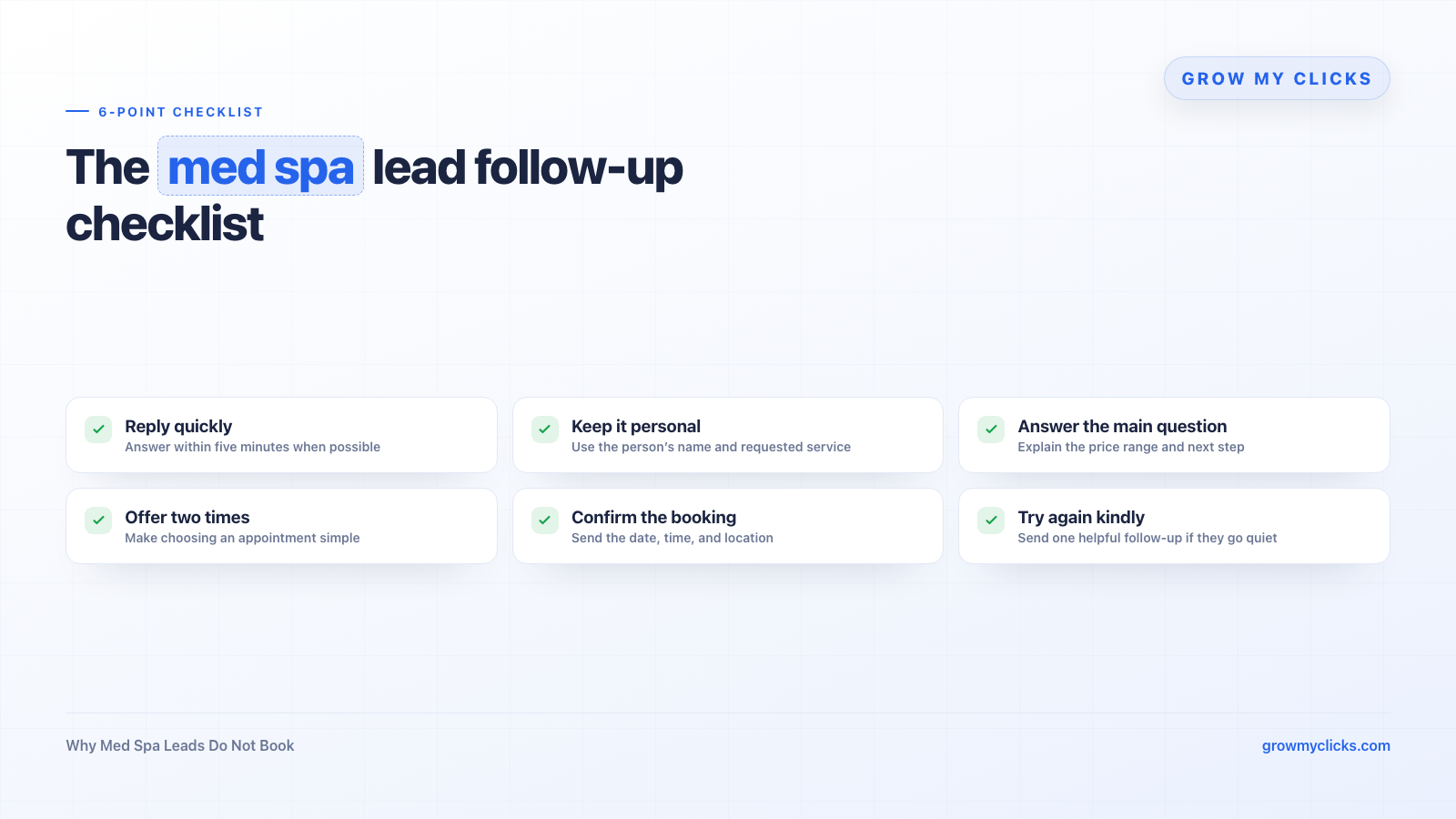
Create a short follow-up plan for people who have not booked. It might include:
- A quick text soon after the request.
- A call during business hours.
- A helpful message later that day or the next day.
- A final check-in a few days later.
Each message should make the next step easy. Avoid messages that only say, “Just following up.” Remind the person why you are contacting them and offer one useful action.
For example:
Hi Maya, I wanted to make sure you received my message about your laser hair removal request. You can reply with any question, or choose a consultation time here: [booking link].
Klaviyo lists messages for unfinished bookings and service reminders as useful options for wellness businesses. You do not need a complex setup to learn from that idea. If someone starts but does not finish booking, send a polite reminder with a direct path back.
Stop follow-up when the person asks you to stop. Also stop when they book, so they do not keep receiving messages meant for someone without an appointment.
Your team needs one clear view of each lead
Follow-up breaks down when requests are spread across an email inbox, paper notes, personal phones, and staff memory.
Keep a simple record for every new lead. It should show:
- The person’s name and contact details
- The service they asked about
- When the request arrived
- Who is responsible for replying
- The last contact attempt
- The next step
- Whether the person booked
This can begin as a shared sheet if your lead volume is low. The key is that everyone uses the same place and updates it.
Larger teams may use a client management system, which is simply a tool for keeping contact details, notes, and follow-up tasks together. Mindbody describes features that let a business see where prospects are, assign follow-ups, add notes, and move people toward becoming clients. Whatever tool you choose, make ownership clear. Every lead should have one person responsible for the next action.
Track appointments, not just form fills
A report that shows 40 form fills may look encouraging. But it does not tell you whether those requests became appointments.
For each lead, record the final result. Useful labels can stay simple:
- New request
- Contacted
- Replied
- Booked
- Did not book
- Not a fit
Then review the list each week. Look for where people stop moving forward.
If many leads never receive a quick reply, fix staffing or alerts. If people reply but do not choose a time, simplify booking. If they book but do not arrive, improve reminders and explain your cancellation policy before the visit.
Before spending more on ads, make sure you can answer three questions:
- How many people asked about a service?
- How many of them booked?
- How many arrived for the appointment?
Those answers show whether the main problem is getting interest or turning interest into visits.
Fix the handoff before blaming the ads
Good ads cannot repair a confusing booking process. More leads will not help if replies are slow, calls are missed, or no one knows who should follow up.
Start with the basics:
- Reply quickly.
- Say who you are and why you are contacting the person.
- Tell them exactly what happens next.
- Give them a direct way to book.
- Follow up more than once when they do not respond.
- Keep one clear record of every request.
- Mark whether each lead became an appointment.
If you want help looking at the full path from ad click to booked visit, read about Google Ads for med spas. If it seems useful, you can also book a low-pressure strategy call with Grow My Clicks. We will look for the points where interested people get stuck and discuss practical ways to make booking easier.
If the handoff is clear but people still hesitate before submitting, review whether the ad is sending them to the right page. Use the med spa booking-page or landing-page guide.
Want a clearer med spa ad and booking path?
We can review your treatment campaigns, landing pages, lead handoff, and appointment tracking. You will get a practical list of the gaps to fix first.
Frequently asked questions
Why do med spa leads fill out a form but not book?
A person may be interested without being ready to commit. Interest can also fade when replies are slow, the next step is unclear, or booking requires too much back-and-forth.
How quickly should my med spa reply to a new lead?
Reply as soon as you can. During business hours, assign someone to watch for new requests and name a backup. After hours, send a short confirmation right away and say when a team member will respond.
Should we follow up after a lead misses our call?
Yes. A missed call is not a rejection. Use a short plan that can include a quick text, a business-hours call, a helpful message later, and a final check-in a few days later. Stop when the person asks or when they book.
What should my med spa track after a form is submitted?
Track the person’s details, requested service, request time, responsible team member, last contact, next step, and whether the person booked. Review how many people asked, booked, and arrived.